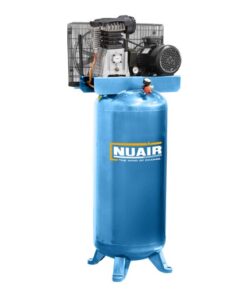
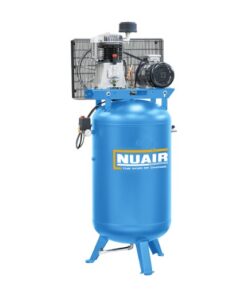
What Should You Look for When Choosing a Vertical Compressor
The size and shape of the receiver matter, but they shouldn’t be the only reasons you choose a compressor. You also need to make sure it can keep up with the work you’re asking it to do.
How Much Air Does It Deliver?
Check the compressor’s Free Air Delivery, usually shown as FAD and measured in CFM.
This tells you how much usable compressed air the machine can actually deliver. Compare it with the CFM requirements of the tools or equipment you want to run.
The receiver capacity tells you how much compressed air can be stored. It doesn’t tell you how quickly the compressor can replace the air you’ve used.
If all of that sounds like compressor bingo, give us a call and tell us what you need to run. We’ll help you work it out.
Does Your Electrical Supply Match?
Our vertical air compressor range includes both single-phase and three-phase machines.
A 150-litre receiver is generally the largest popular option for a single-phase piston compressor. However, you’ll also need to check the electrical requirements because some larger models require a 16-amp or 20-amp supply.
Don’t order the compressor first and discover the plug situation afterwards. If you aren’t sure what your workshop can support, speak to us before buying.
What Working Pressure Do You Need?
Check the operating pressure required by your air tools or equipment. This will normally be shown in bar or PSI.
A bigger number isn’t automatically better. You need a compressor that provides the correct combination of pressure and airflow for the work you’re doing.
What About the Noise?
A vertical air compressor isn’t automatically any louder than a horizontal model.
If the two machines use the same pump and motor, the noise level will be much the same. The receiver standing upright doesn’t suddenly make the motor shout louder.
If noise is an important consideration, check the stated decibel rating or have a look at our dedicated silent air compressors.